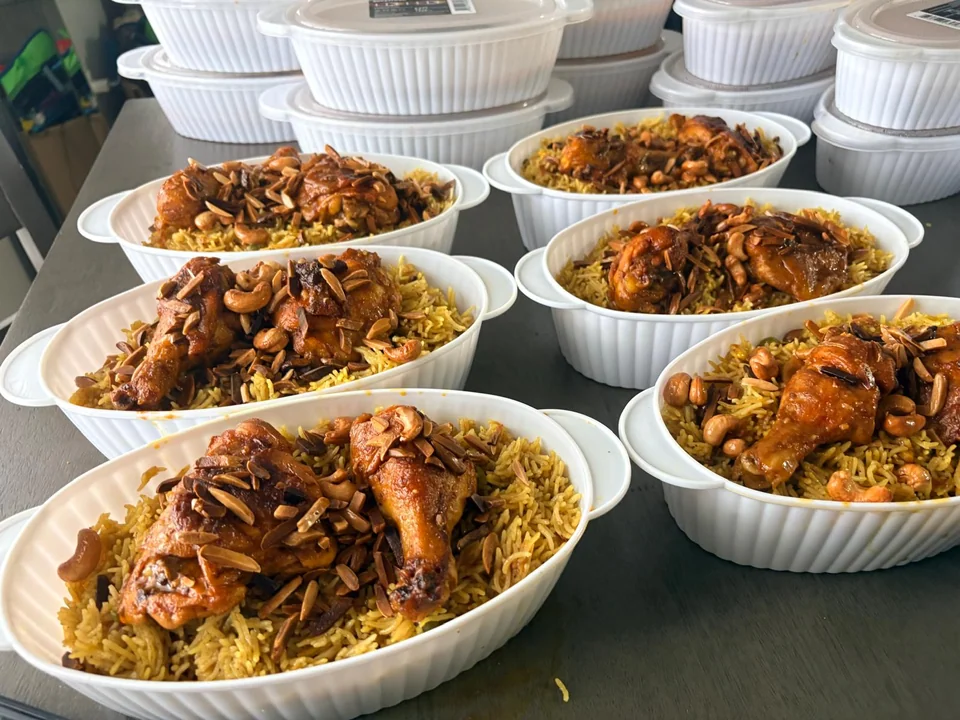
Count chicken pieces as well as guests
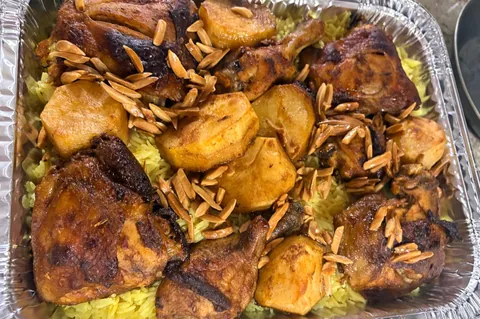
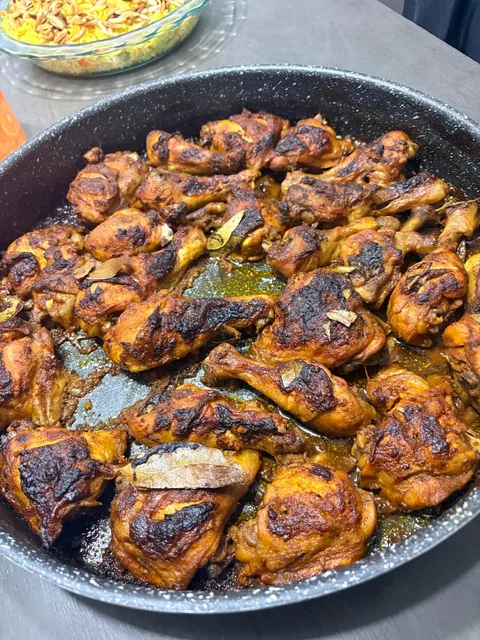
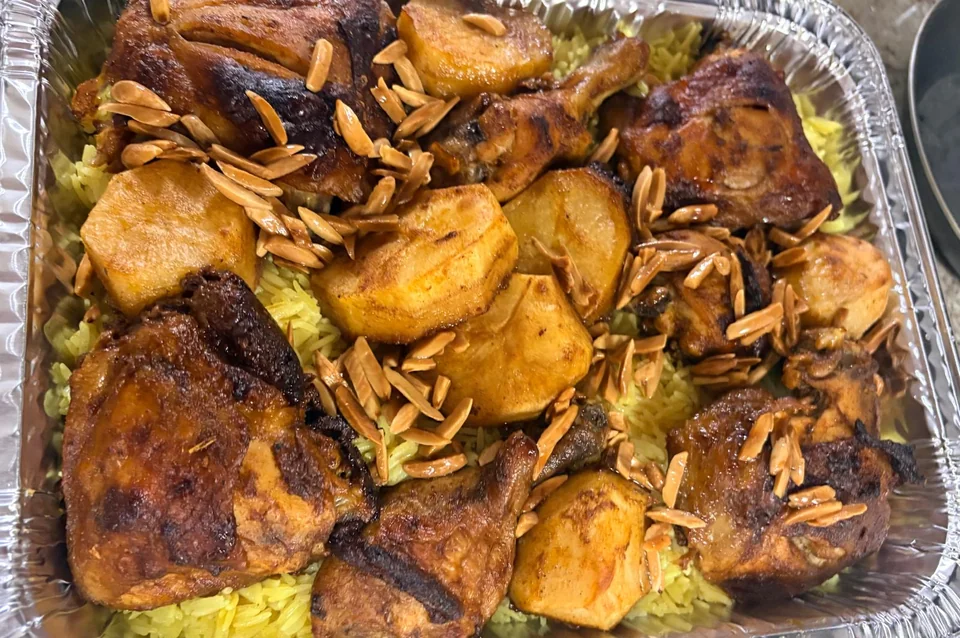
A family count does not tell the kitchen how people will share a tray. Explain whether everyone expects chicken, whether children need their own portions and whether there is another protein on the table. Ask Z how the proposed pieces divide across your group. Avoid trying to calculate a serving yield from the close-up photograph; the frame does not show a guaranteed tray size.
Give the rice a clear role
The golden rice in the photo sits beneath browned chicken and a sliced-nut garnish. If this is the main starch at dinner, say so. If you are adding grape leaves or stuffed zucchini, explain that too. Ask whether the rice amount should change when other substantial dishes join the order. The answer depends on the complete meal, not just the name chicken and rice.
Add a fresh contrast
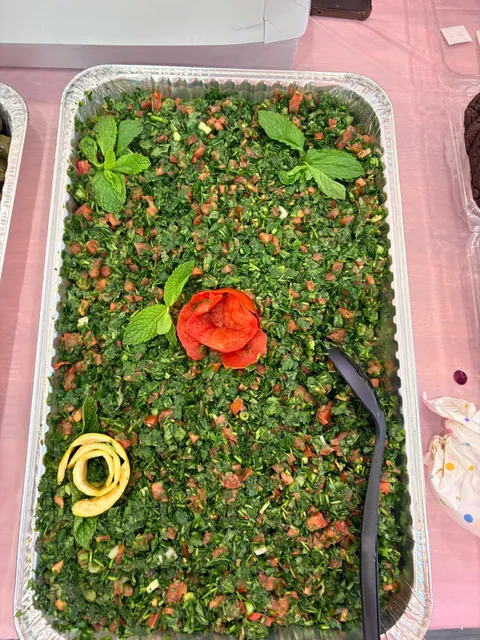
The tabbouleh photo shows chopped greens, tomato and mint. It is a useful reference when asking about a salad alongside the chicken. Confirm whether salad is included or ordered separately, and check the ingredients if a guest has restrictions. Do not assume a sauce or dressing is part of the tray unless Z includes it in the written order.
Choose how dinner reaches the table
A shared tray is straightforward when everyone eats together. Individual portions can be helpful if meals are handed out or eaten at different times. Ask about packing, containers and any handling instructions for the agreed food. Mention the actual serving time, especially if it differs from the time you will receive the meal.
Check the garnish before ordering
The original photo shows nuts on the rice and chicken. If nuts matter to a guest, discuss that before settling on this dish. Ask about ingredients mixed through the rice as well as what is visible on top. Z must confirm whether a suitable preparation is possible; removing a garnish after the meal arrives is not the same conversation.