The USDA checklist
USDA advises refrigerating perishable leftovers within two hours, or one hour above 90°F. Divide large amounts into shallow containers for faster cooling. Keep refrigerated leftovers at 40°F or below and use them within three to four days. Reheat leftovers to 165°F, checking several places with a food thermometer. Bring soups, sauces and gravies to a rolling boil. Discard food left out beyond the recommended limits. These are general household guidelines; follow any more specific instructions for the actual dish.
Ask about the tray before putting it in an appliance
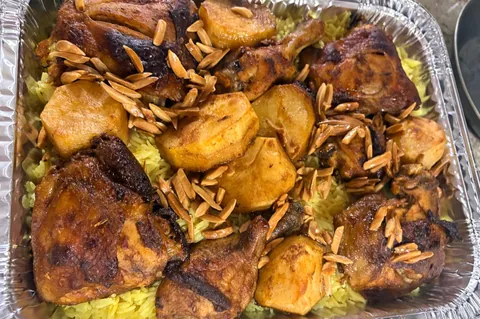
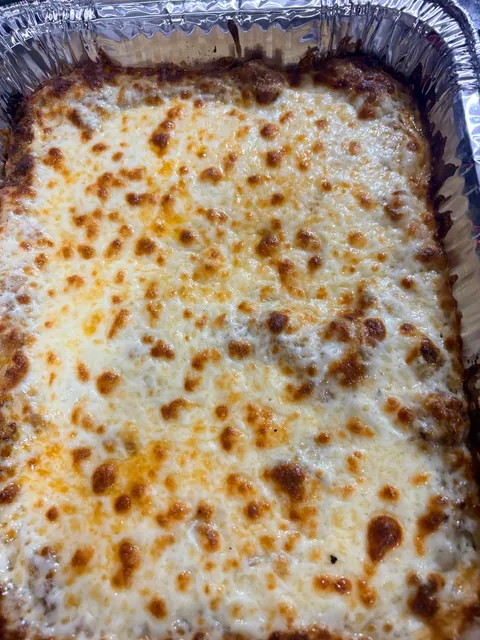
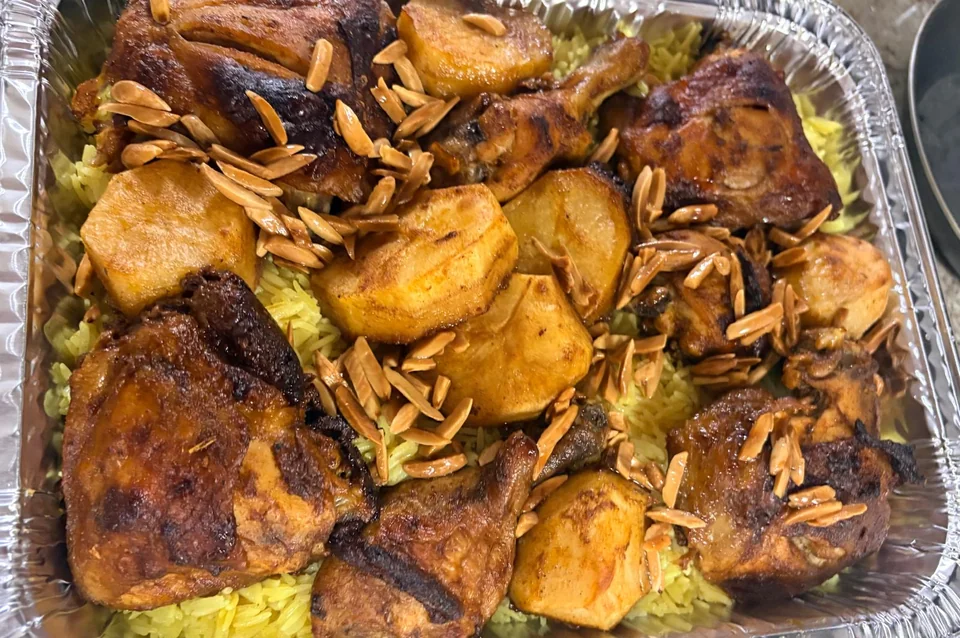
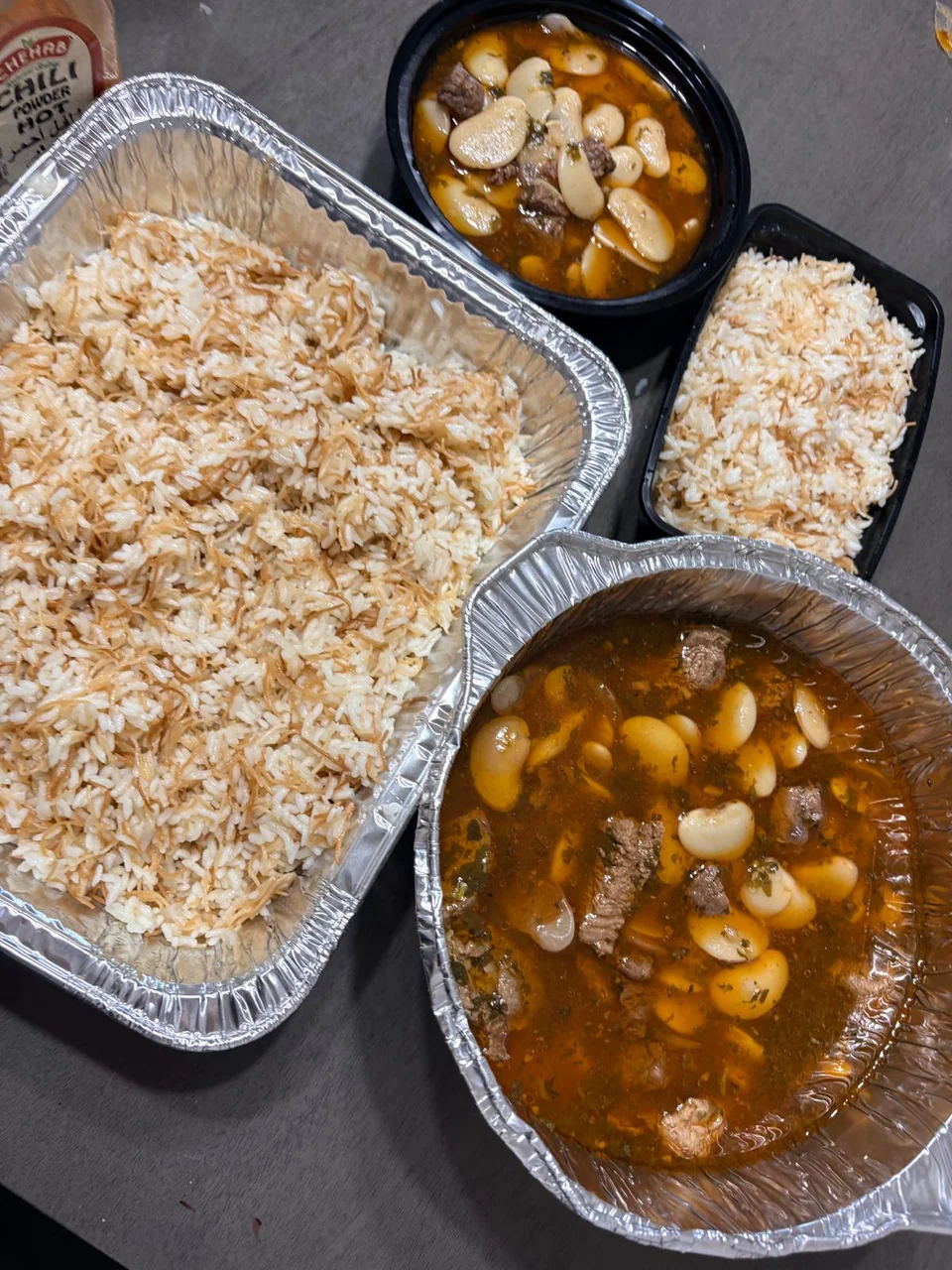
Z’s photos show foil family trays as well as individual containers. A photo cannot tell you whether a particular lid, insert or container is suitable for an oven or microwave. Ask the kitchen and check the container’s instructions. Transfer food to an appropriate container when needed rather than assuming everything supplied for transport is also intended for reheating.
Make a plan for rice and stew separately
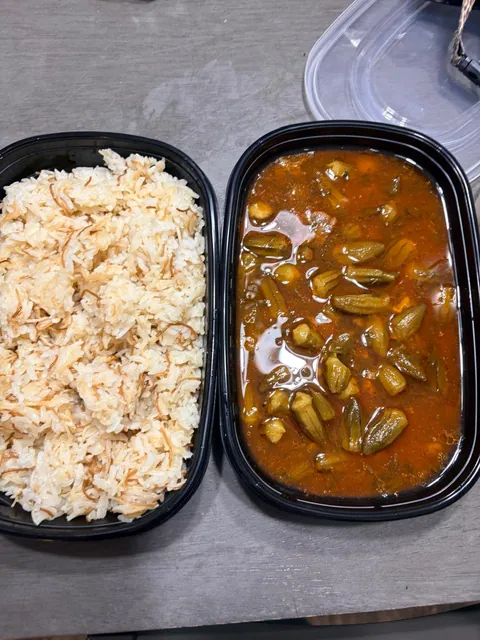
The gallery includes rice in large trays and stews in separate bowls. Before serving, decide where leftovers from each component will go and have suitable containers ready. Avoid waiting until the end of a long gathering to work out storage. Keep the date and dish name with the leftovers so different foods are easy to identify.
Use a thermometer, not the steam as a test
A deep tray can warm unevenly, and a hot edge does not prove the center has reached the needed temperature. Follow appliance and dish instructions and use a food thermometer. If a meal contains separate components, check them appropriately rather than judging the whole plate by whichever part feels hottest.
Keep the order-specific advice
Ask Z how the confirmed dish should be received, stored and reheated. Keep that answer with the order, especially if another person will handle the food. This guide does not provide a recipe-specific shelf life, guarantee a container’s heat tolerance or replace the kitchen’s information about what was prepared.
Source: USDA: Leftovers and Food Safety. Food photographs and menu examples are supplied by Z.