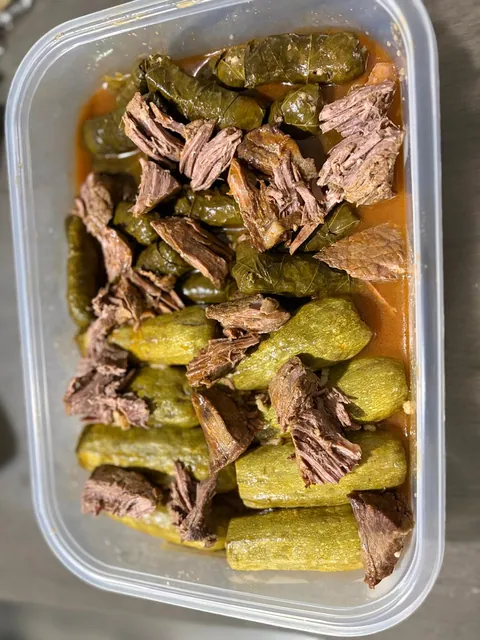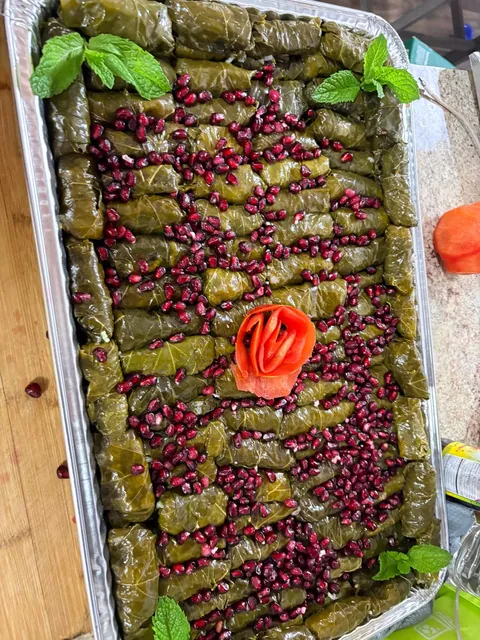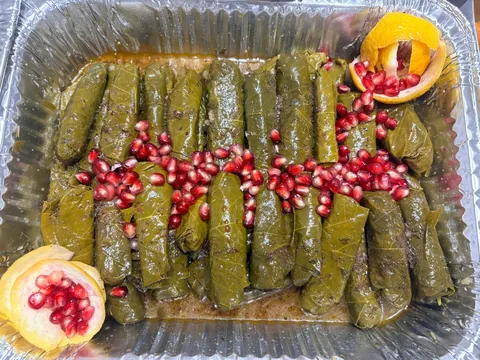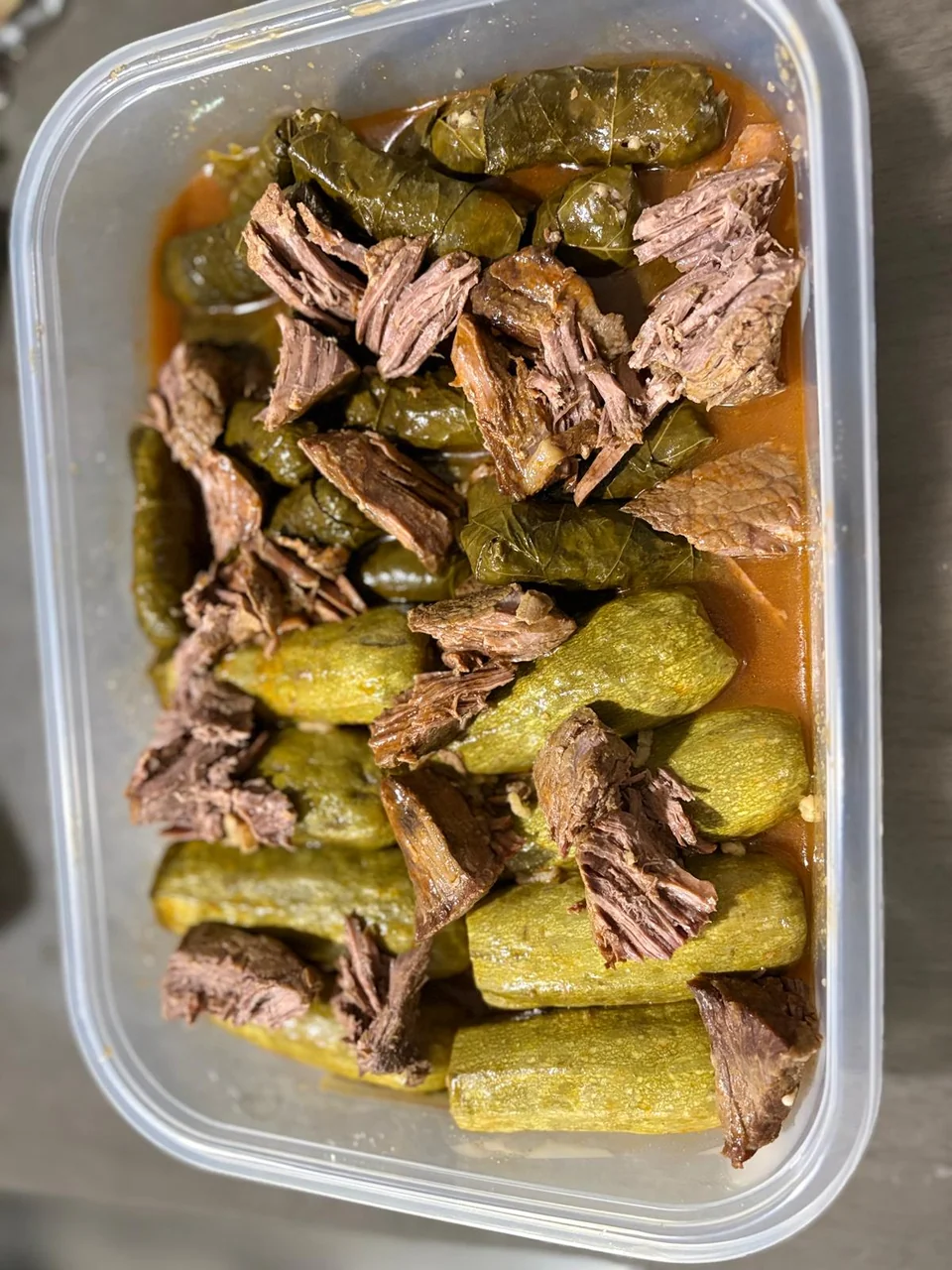
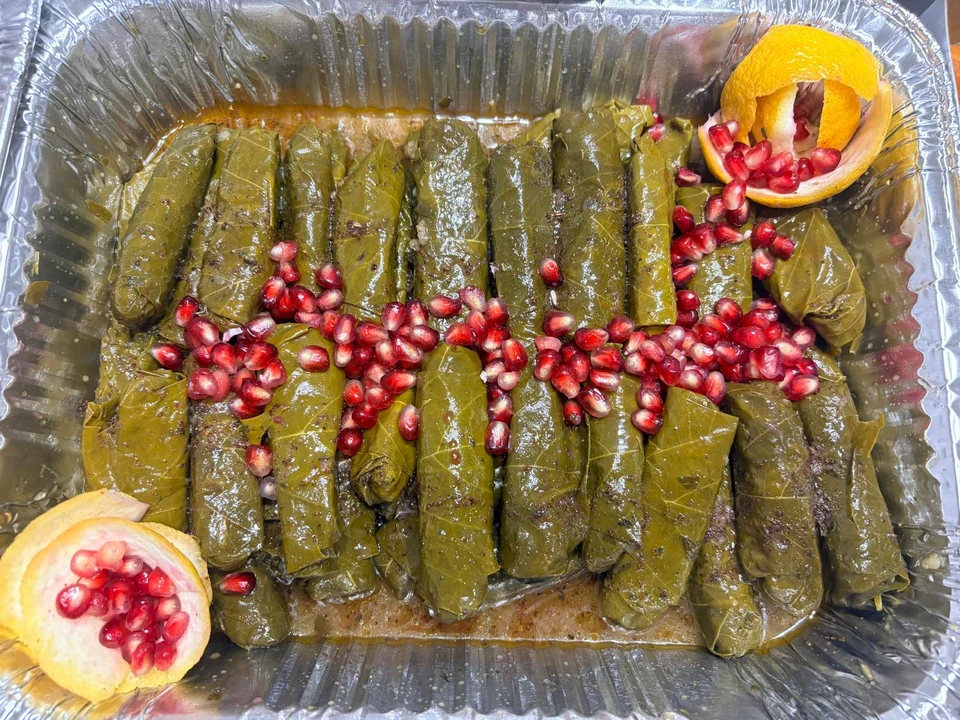
Look at shape and serving style
The zucchini in the gallery are larger pieces that guests can lift out individually; the grape leaves are smaller rolls arranged around or beside them. That difference matters when people serve themselves. Someone may take several rolls and one zucchini, while another guest wants only one favorite. Tell Z which balance suits your table instead of dividing the guest count evenly between the two.
Ask about fillings separately
The same tray does not prove the same filling. Ask what goes inside the zucchini and what goes inside the grape leaves, then confirm whether the preparation includes meat and rice. Sauce is another separate question. If you remember a family recipe with a particular sauce, describe it. Z can confirm whether she makes that version and whether it works in the proposed mixed order.
Decide whether you need another rice dish
Stuffed vegetables may already contain rice, but the exact filling here needs confirmation. If you are also ordering chicken and rice, tell Z. The useful question is how to build a complete meal with enough choice, rather than automatically adding a full amount of every dish. A fresh salad can give the spread another texture without repeating the same role.
Choose a shared order or separate trays
Separate trays may make sense when guests have strong preferences or when you want to discuss different fillings. A mixed tray may be simpler for a family table. Ask which options Z can prepare and how they affect the order. If ingredients must stay separate for a dietary reason, discuss preparation and packing directly; separate containers alone do not establish suitability.
Send a request the kitchen can answer
Include the date, city, guest count and a link to the photo you like. Name the vegetables, the requested balance and the rest of the meal. Ask Z to confirm the final combination and serving guidance. Keep that answer with the agreed price and arrangements so the visual reference does not become a substitute for the actual order.