Start with what the salad is doing
At a table with several mains, a salad may be something guests take a little of alongside other food. At a lighter lunch, it may take a larger share of the plate. Tell Z which meal you are planning. “Salad for the whole group” is less useful than explaining whether there will be other salads, vegetables and substantial dishes.
Use the original photo for presentation
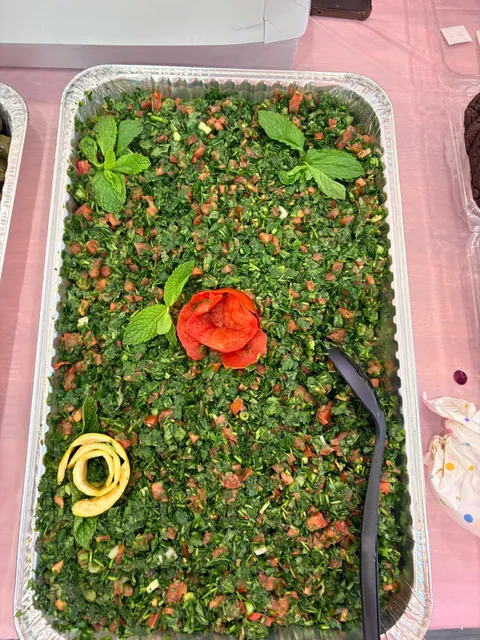
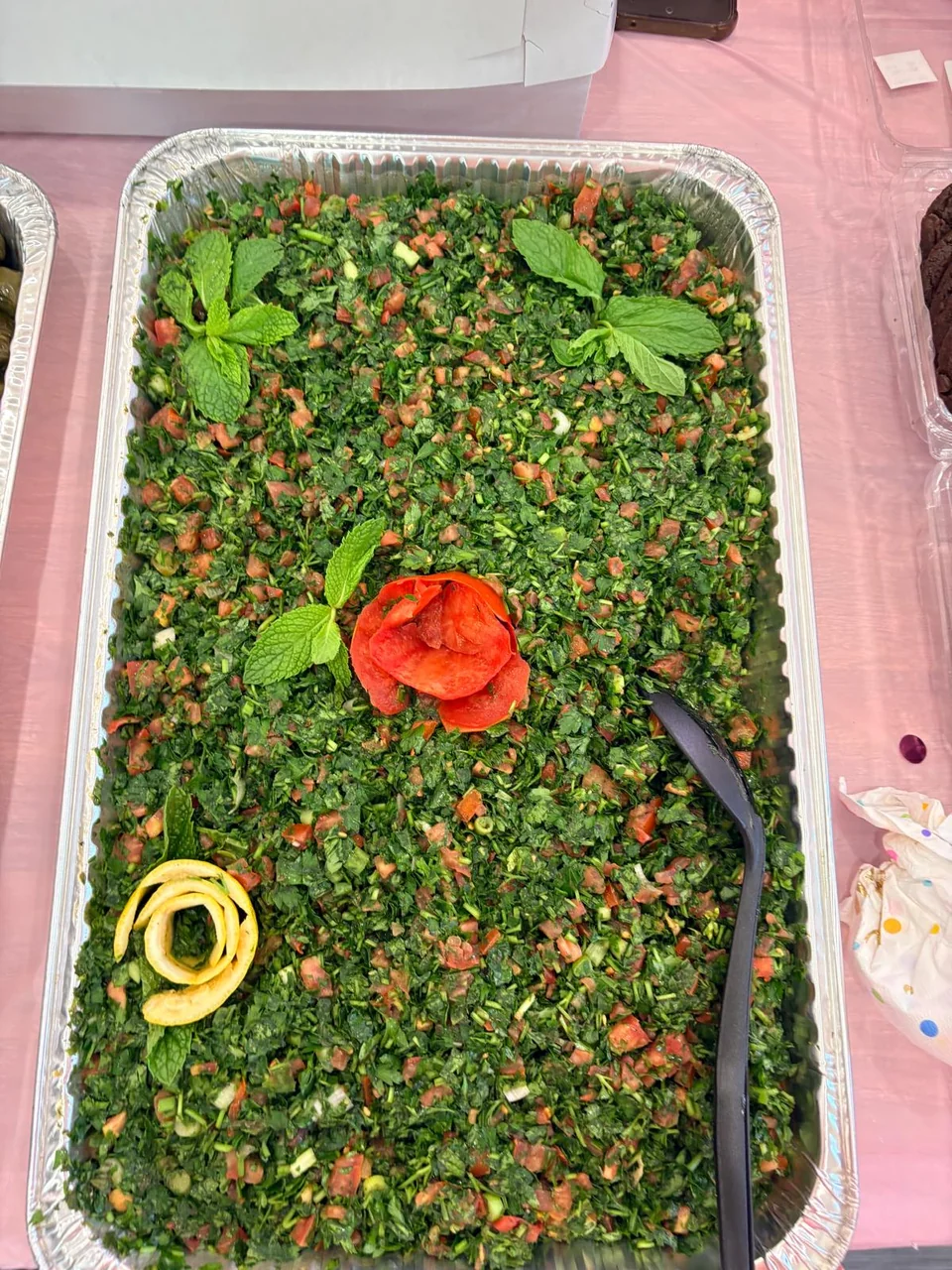
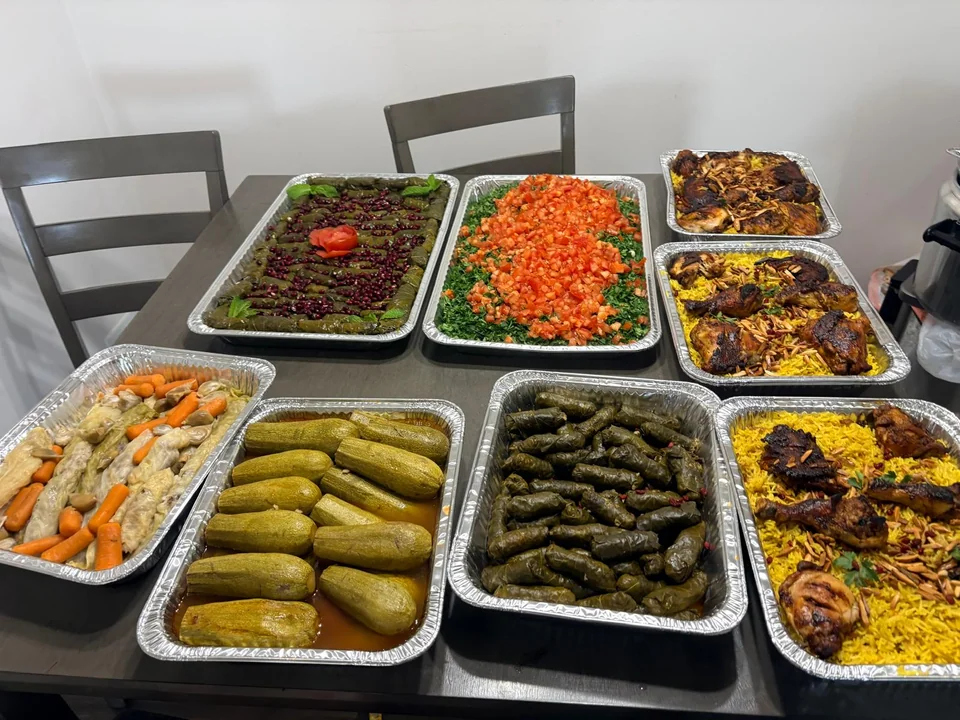
The close-up tray has finely chopped greens, tomato, mint and a tomato rose. The wider spread places salad beside several warm dishes. Those are two different kinds of evidence: one helps you discuss appearance, and the other helps you picture the overall table. Neither photograph confirms the exact ingredients, dressing amount or future serving yield.
Ask about bulgur and dressing
Tabbouleh often contains bulgur. Ask Z about her actual preparation if wheat is a concern, and check other ingredients that matter to your guests. A salad’s green appearance does not establish gluten-free, vegan or allergen-safe status. If you have a preference about dressing or a strong ingredient, ask whether an adjustment is possible before the order is confirmed.
Keep the menu balanced
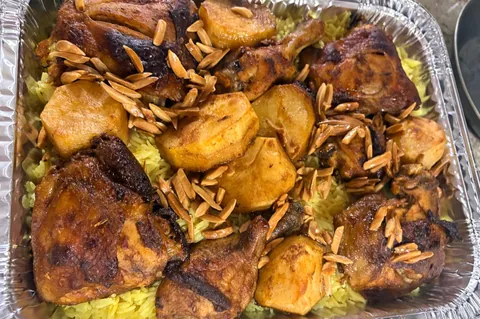
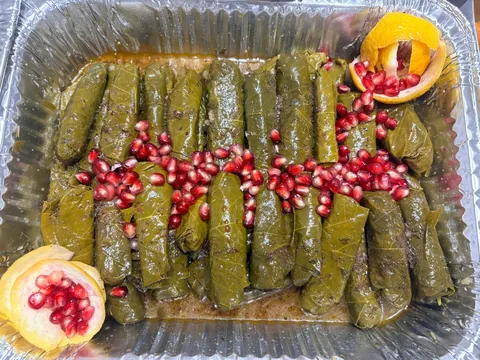
Chicken and rice with tabbouleh is one way to discuss a meal. Stuffed vegetables with tabbouleh is another. These are suggested combinations using foods shown in Z’s gallery, not advertised packages. Ask what is available together and whether salad comes with a named meal before ordering a separate tray.
Plan the serving details
Ask how the salad should be stored and served for the actual order, and follow the instructions Z provides. If a gathering runs over several hours, include that in the conversation. The kitchen needs the serving plan as well as the guest count. Confirm containers and any separate dressing or garnish rather than relying on what appears in the photo.